Joburg Contemporary Art Foundation
There are some places that inspire you. Places you feel deeply connected to, without being able to explain why. For me, the Joburg Contemporary Art Foundation (JCAF) is one of them — an academic research institute, a platform for museum exhibitions, and an innovative technology laboratory.
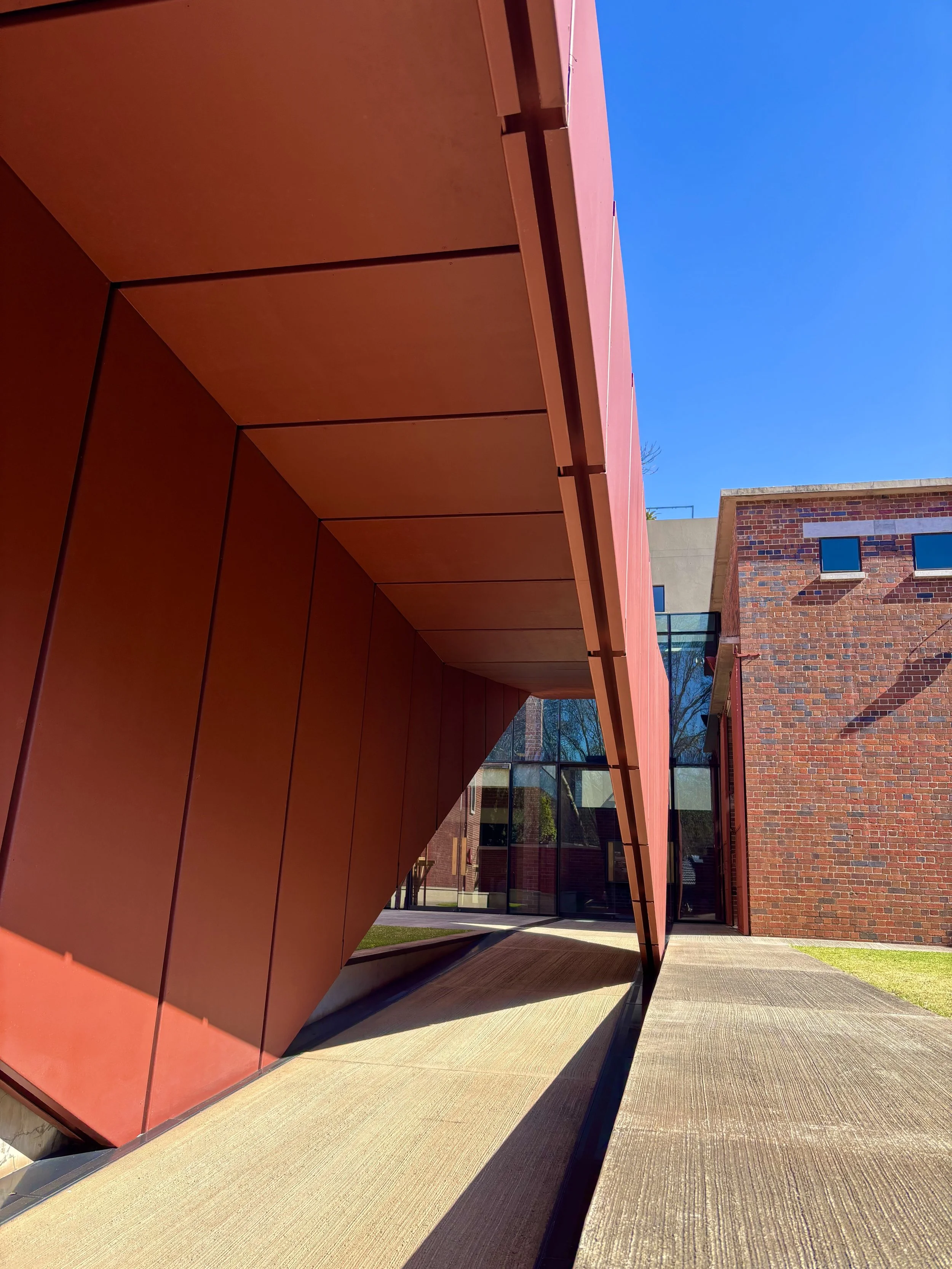
Situated in a former heritage site (an electrical tram shed and substation that were formerly part of Johannesburg’s tram network), the building has been refurbished with respect for its original modernist character. It speaks to both heritage and innovation, anchored in modernity, while quietly telling its own story.
Once part of the city’s circulation system, the space now sustains another kind of movement; connecting ideas, practices, and voices locally and across the Global South. Intentionally rooted in exchange and dialogue:
From us, by us.
During my first visit, what stunned me most was the architecture. Its form and geometry, the building’s earthy tones blending in harmony with the natural elements. Sunlight filters in gently, trees surround the space, and everything seems to move together in a quiet visual dance. The result? A feeling of calm; a visual poetry that invites you to slow down.
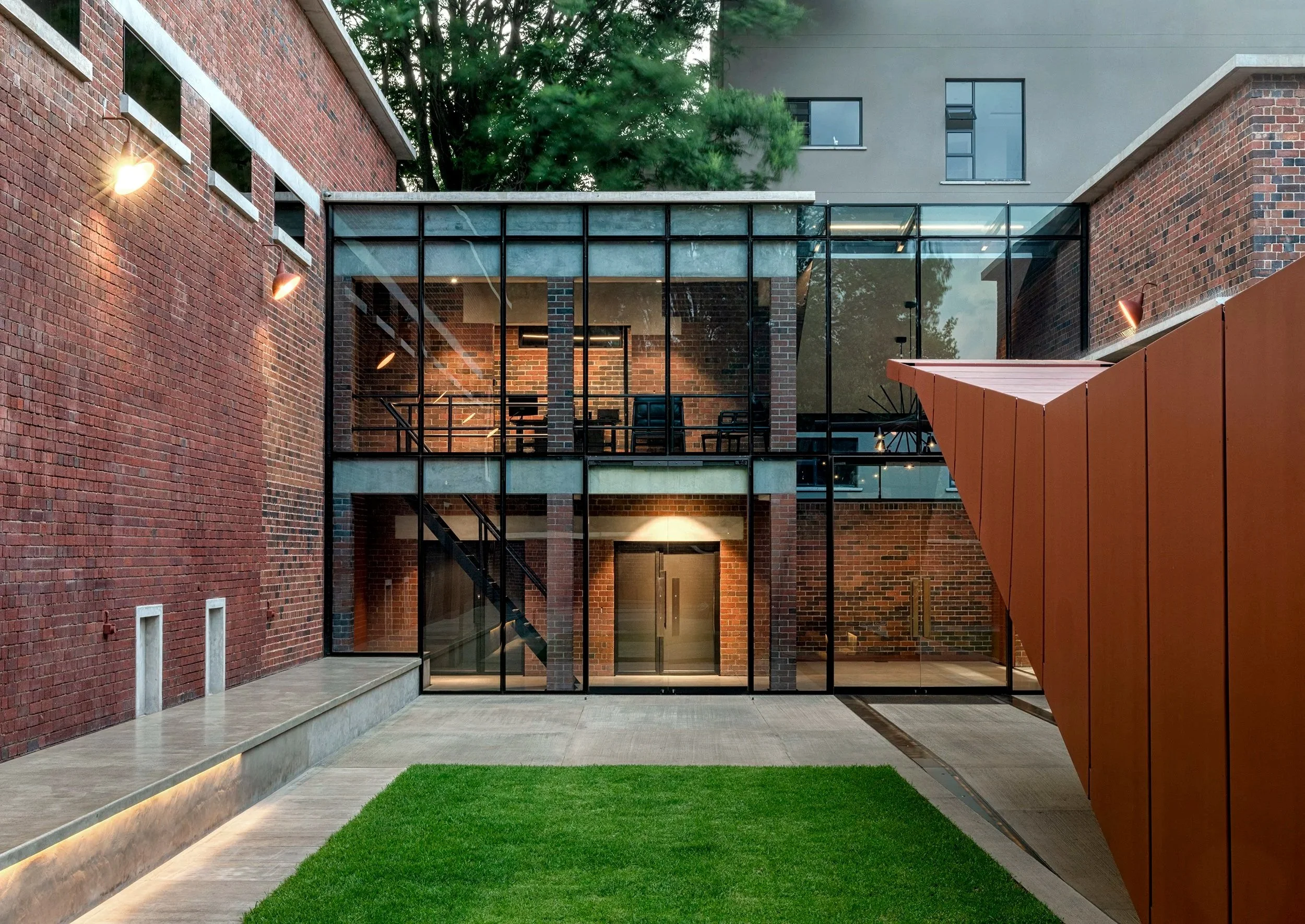
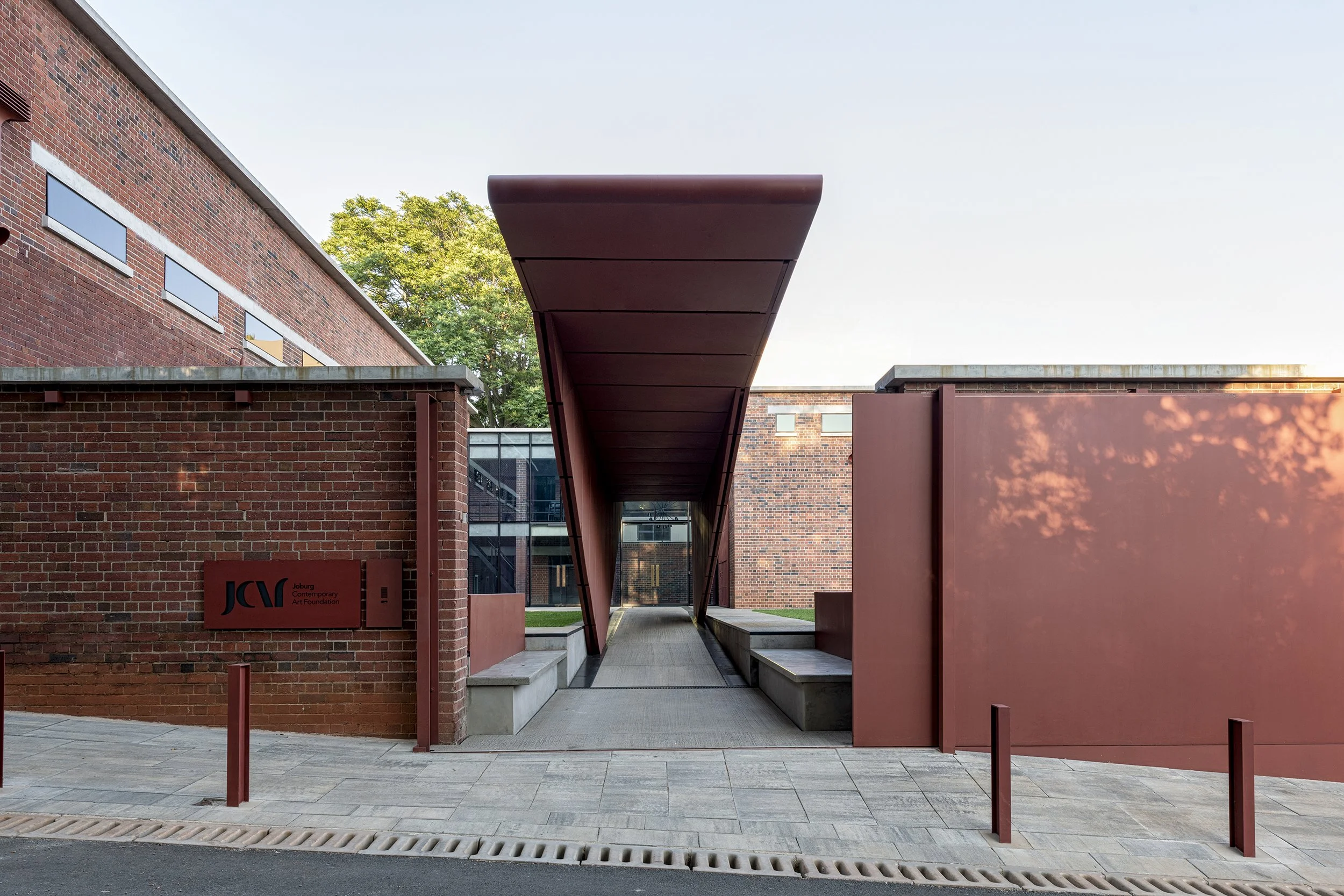
Joburg Contemporary Art Foundation (JCAF) entrance. Photo Graham De Lacy. Courtesy JCAF/ Joburg Contemporary Art Foundation (JCAF) courtyard. Photo Graham De Lacy. Courtesy JCAF.
The foundation has an intimate approach to arts and research. The experience feels educational, in the most generous sense of the word. Exhibitions are visited in small groups, accompanied by a guide, creating space for listening, questioning, and exchange.
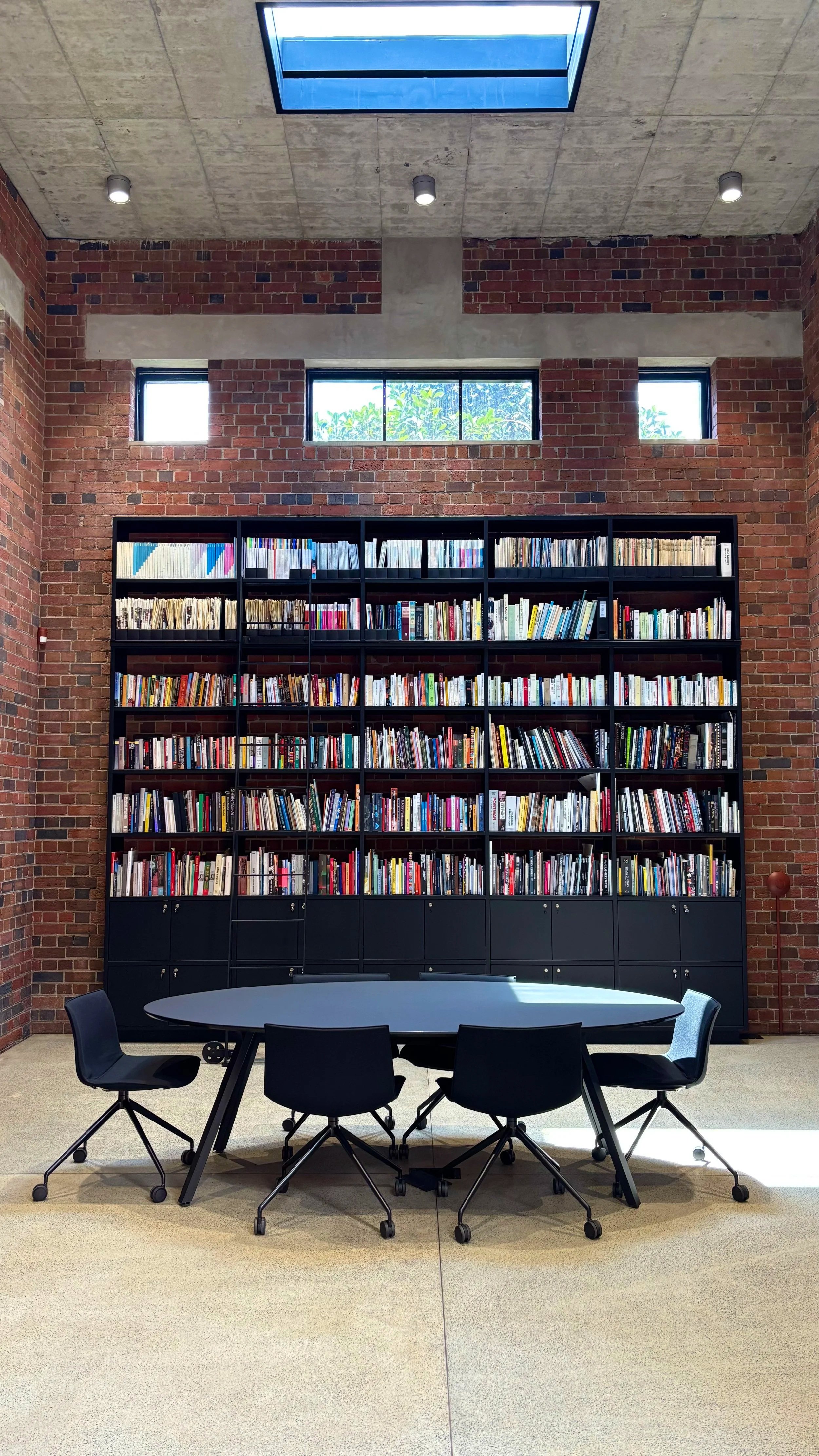
They also host conversations, talks, and a podcast where different experts share their perspectives. A curated library is open to the public during their “Library Fridays”, offering an intentional selection that covers their own research, and topics such as art and cultural theory, African art and photography, and French African literature, to name a few.
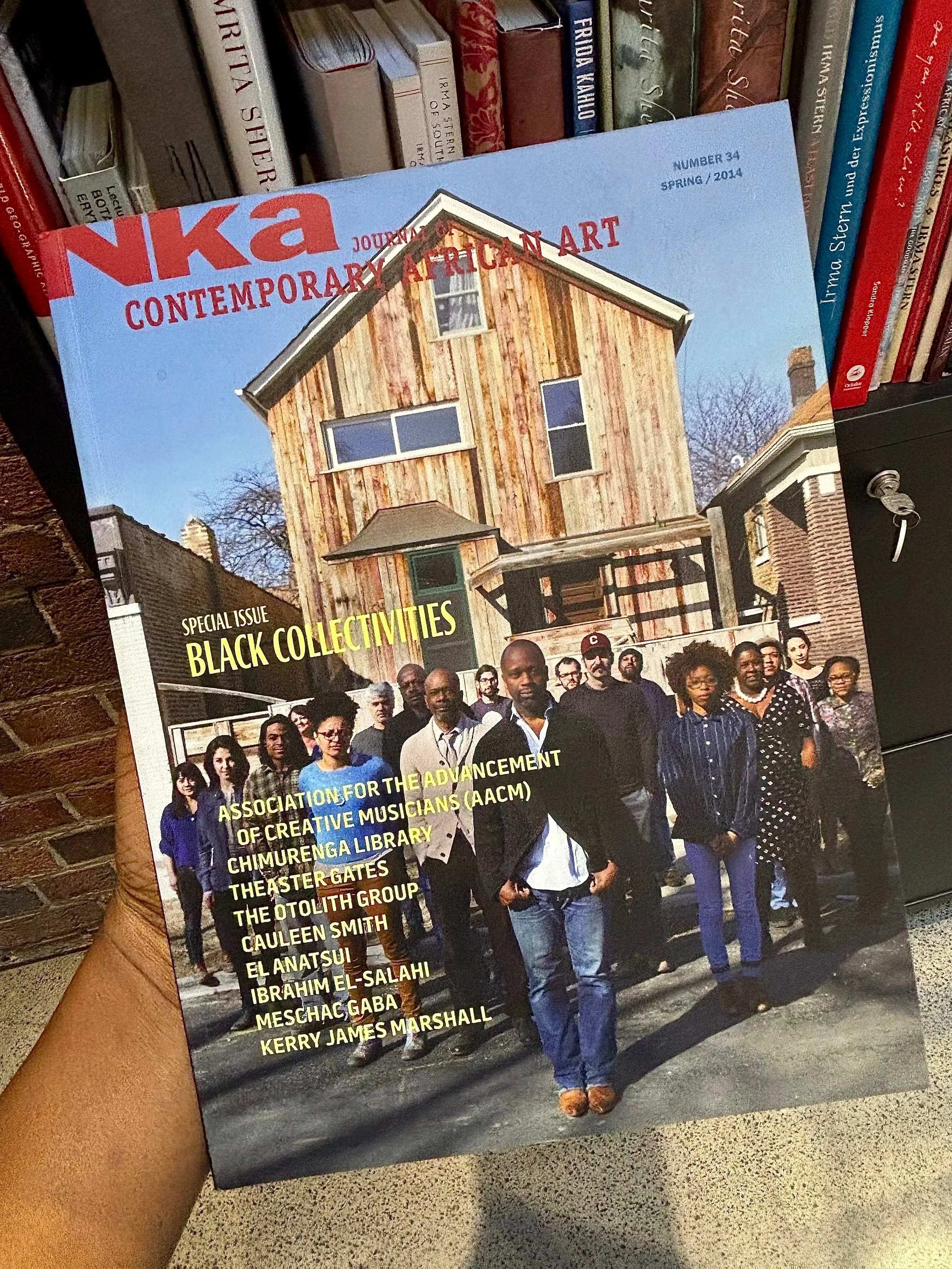
-Structures: An Immersive Journey-
It was during one of my visits that I was able to experience my first exhibition at the foundation — Structures — while it was still on view. Part of a curatorial trilogy reflecting on the theme of Worldmaking, the programme began with Ecosphere, which explored ecological systems and environmental structures. Held between 31 May and 15 November 2025, Structures was the second chapter and unfolded as an immersive journey through architecture, heritage, race, memory, and ideologies.
Through the voices of architects and artists from across the Global South, the exhibition examined how buildings, history, space, and materials shape identity (particularly in Africa), and questioned who gets to define the environments we call our own.
I must admit, I loved the exhibition so much that I went twice!
.
The exhibition opened with Rebecca Potterton’s mural Marks of Home, illustrating architectural and heritage forms rooted in the histories of the Global South. Special mention to vernacular structures such as the Great Mosque of Djenné and the rock-hewn churches of Lalibela.
These buildings stand not only as physical forms but as testimonies carrying identity, knowledge, and cultural continuity long before Western architectural narratives attempted to define modernity.
-Kader Attia — Untitled (Ghardaïa) -
One of the works that stayed with me most was by Franco-Algerian artist Kader Attia: Untitled (Ghardaïa) (2009), a recreation of the ancient Algerian city of Ghardaïa made entirely of couscous.
There was something ‘quietly loud’ and powerful about using such a humble material to reconstruct a city. The granular surface, both delicate and resilient, slowly formed subtle cracks over time, echoing how cities evolve and histories shift.
The work touched on heritage, cultural translation, and appropriation. It reclaimed a narrative tracing how Algerian architectural forms influenced French architects Le Corbusier and Fernand Pouillon's (pictured on the wall) modernist vision, without acknowledgement.
What is often framed as Western innovation is here softly redirected to its source. Influence has always travelled, even when credit did not…
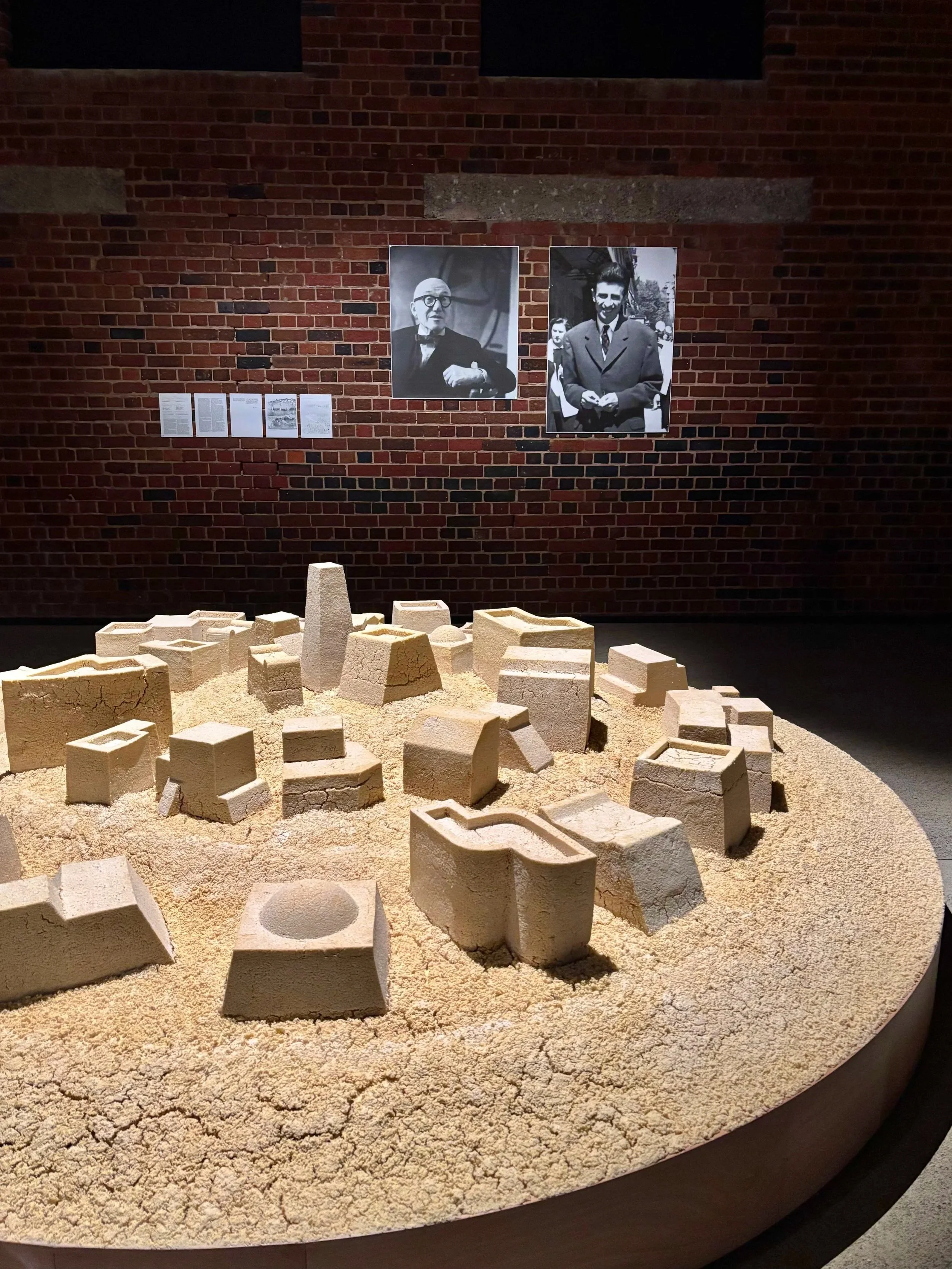
Untitled Ghardaïa (2024) by Kader Attia .
- Igshaan Adams — Gebedswolke -
The suspended works of Igshaan Adams, Gebedswolke (2025), also deeply resonated with me. Cloud-like and weighted with meaning, they evoked movement, demographic fractures, and spatial inequalities still visible in post-apartheid Cape Town.
They reminded me of the suspended, almost celestial, wire installations I encountered during El Anatsui’s Red Moon (in Act II) exhibition at the Tate Modern in London, where migration and human displacement were central.
Different artists. Different countries. Yet the same meditation on movement, land, resilience and a shared gaze toward the Earth. In El Anatsui’s installation, human figures merged into a singular earth-like form, while Igshaan Adams drew from satellite imagery to shape the motifs of his “prayer clouds”.
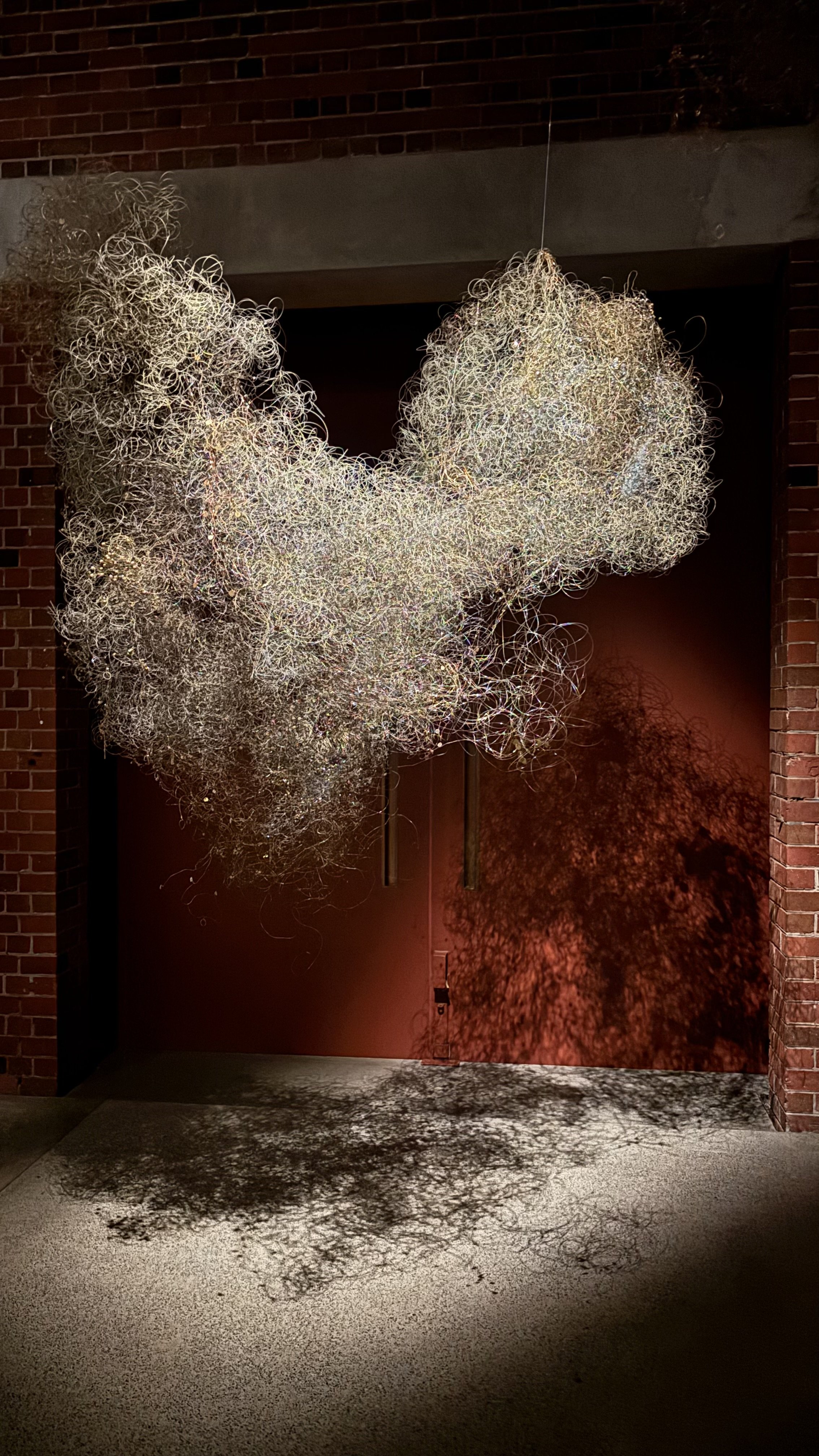
Igshaan Adams, Gebedswolke (2025).
- MADEYOULOOK — Dinokana -
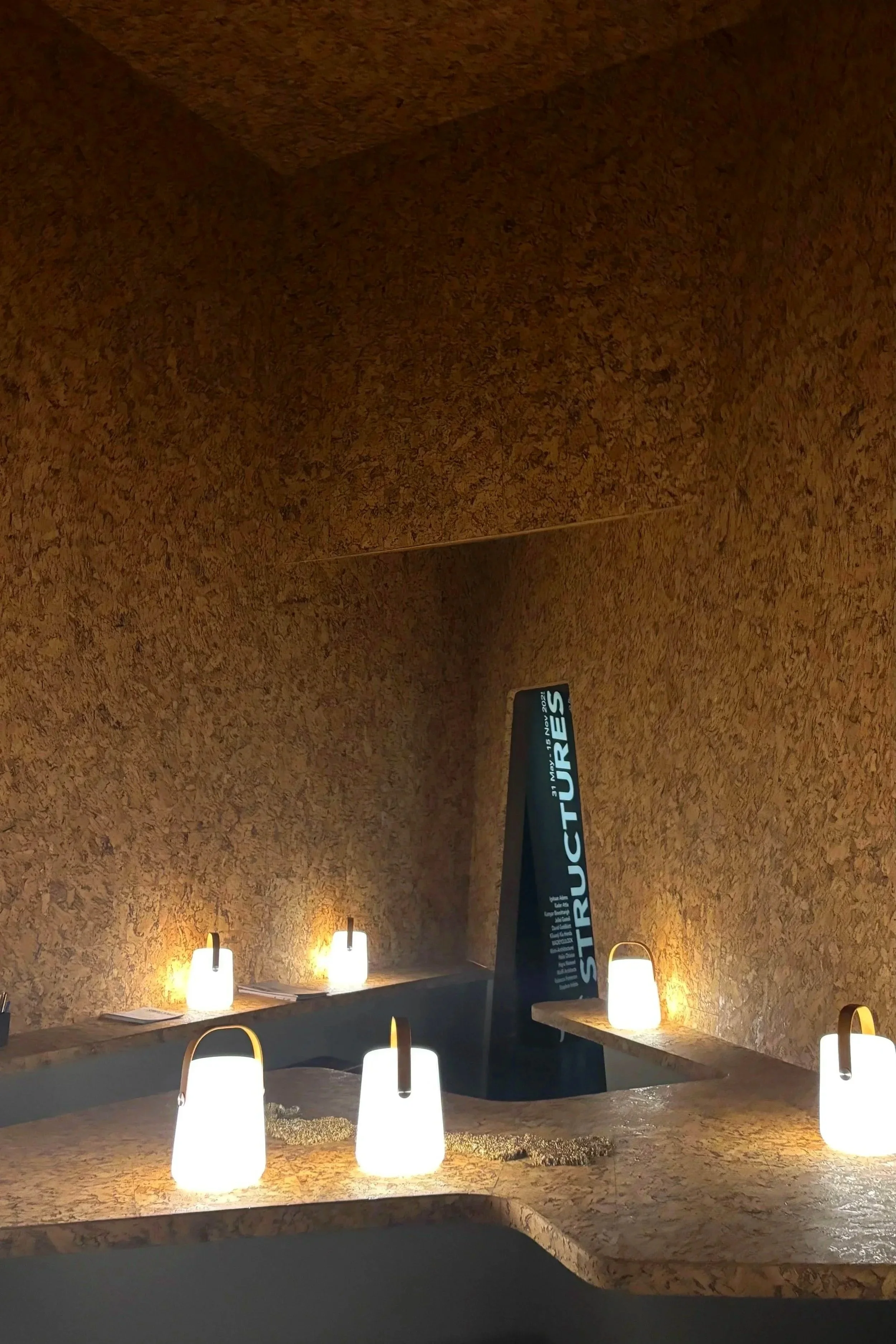
The exhibition closed with Dinokana (2024) by the collective MADEYOULOOK (Molemo Moiloa and Nare Mokgotho), first presented at the South African Pavilion at the 2024 Venice Biennale. The sensory installation traced the histories of the indigenous South African Bahurutse and Bakoni communities, evoking collective memory, migration, and a deep attachment to land and water. A great discovery for me.
Seated within a structure inspired by the Bokoni terraced landscape, we listened to archival rain, harvest songs, and field recordings layered with the distant thunder of Johannesburg. References to the resurrection plant (Myrothamnus flabellifolius), a symbol of resilience and regeneration, anchored the work in continuity.
It felt like an invitation to feel and understand deeply. Another beautiful reminder of how memory shapes identity across generations.
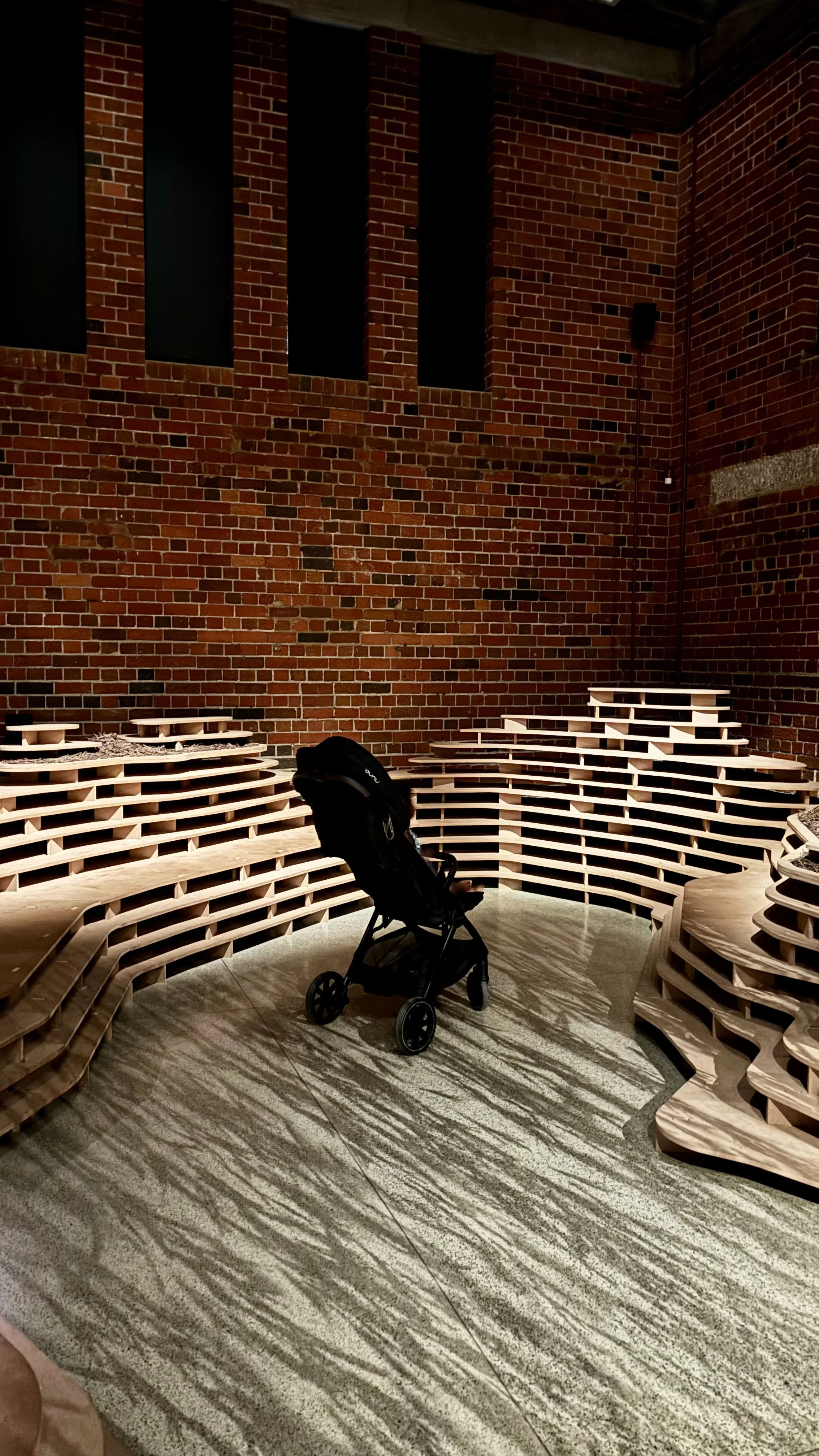
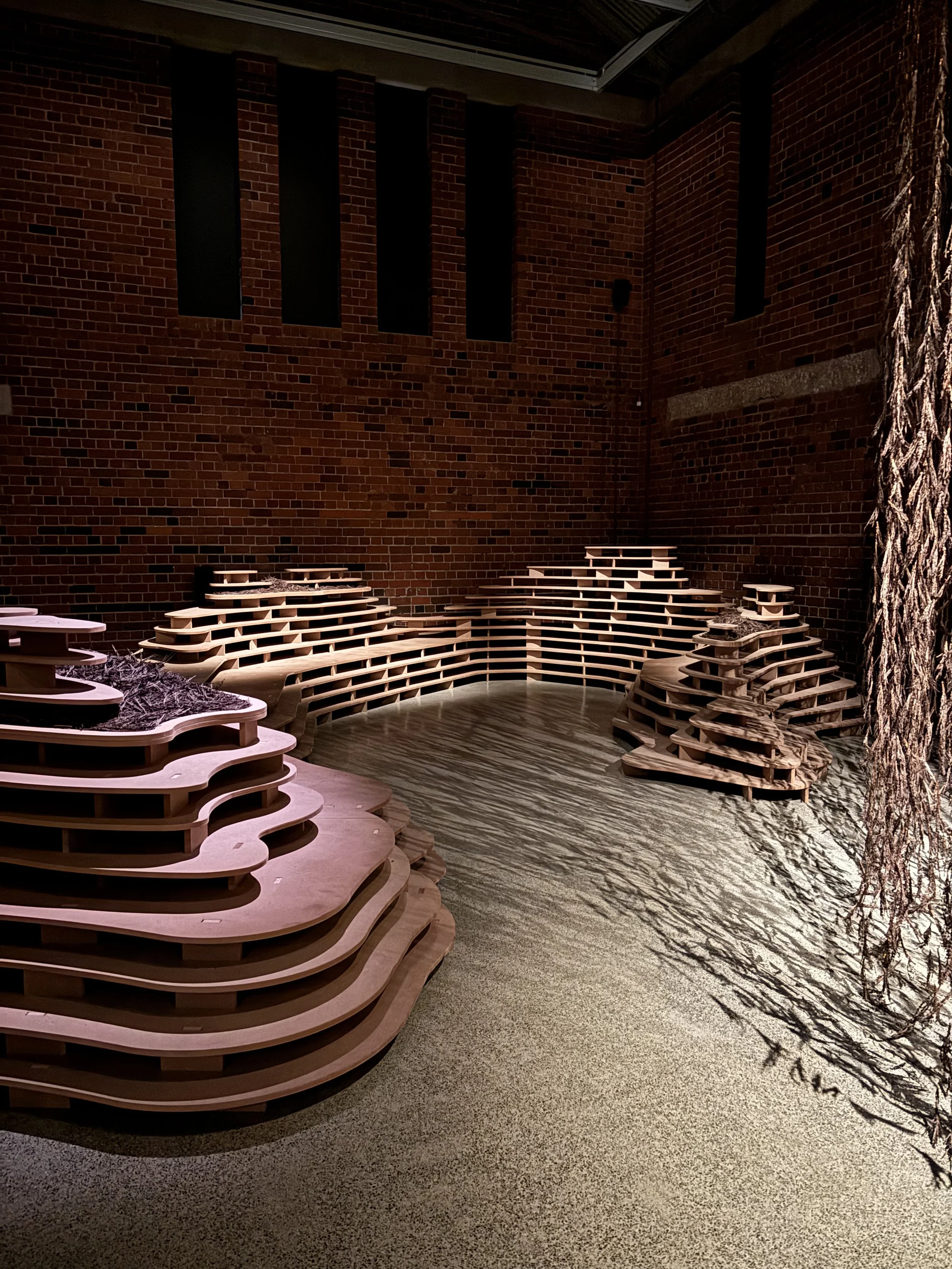
‘Dinokana’ by MADEYOULOOK (2024)